
This page contains affiliate links. If you buy through them, we earn a commission at no extra cost to you. See our Affiliate Disclosure.
Updated October 10, 2026. We update this report when Central Alabama Water publishes new data or when something changes that affects your tap.
The short version
- Your water meets current federal standards. The most recent annual report (2024 data) lists no health-based violations.
- PFAS is the number to watch. The highest PFOS result was 3.6 parts per trillion, 90% of the new EPA limit of 4 ppt that takes effect in 2029.
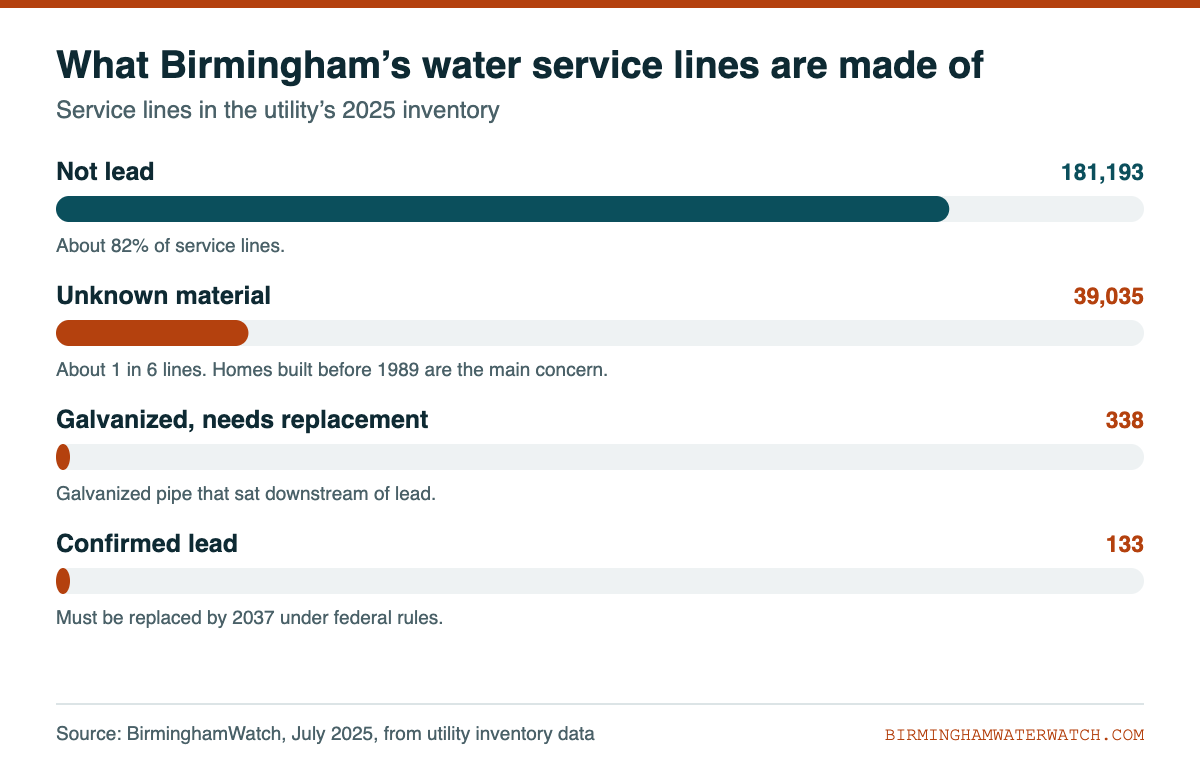
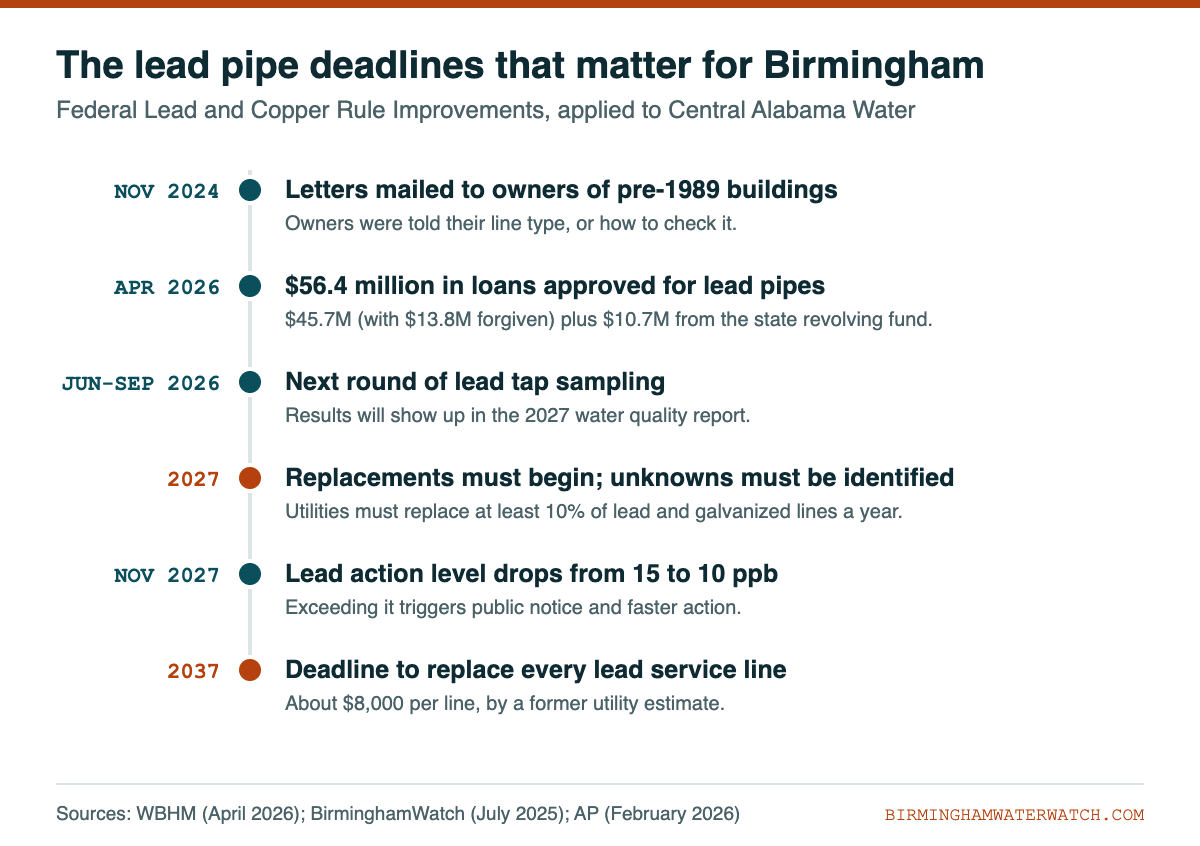
- About 39,000 service lines are of unknown material, and 471 are confirmed lead or galvanized pipe that must be replaced by 2037.
- Most of the system stopped adding fluoride by 2024, and the utility is ending it entirely.
- Roughly 40% of treated water leaks out of aging pipes, while the 2026 capital budget was cut to $35 million.
Who supplies your water
Central Alabama Water (CAW), known as Birmingham Water Works until a 2025 state law restructured its board, serves about 770,000 people across a five-county area. Water comes from the Black Warrior and Cahaba river basins, including the Sipsey Fork, Mulberry Fork, Inland Lake, the Cahaba River, the Little Cahaba River and Lake Purdy. It is treated at four plants: Putnam, Western, Carson and Shades Mountain.
The utility disinfects with chlorine. That matters when you choose a filter: you need one rated for chlorine and its byproducts.
What is in the water
Every utility publishes an annual Consumer Confidence Report. The most recent one, released in 2025, covers 2024 testing, with lead and copper sampled June through September 2023. Here is how the highest detected levels compare with federal limits.
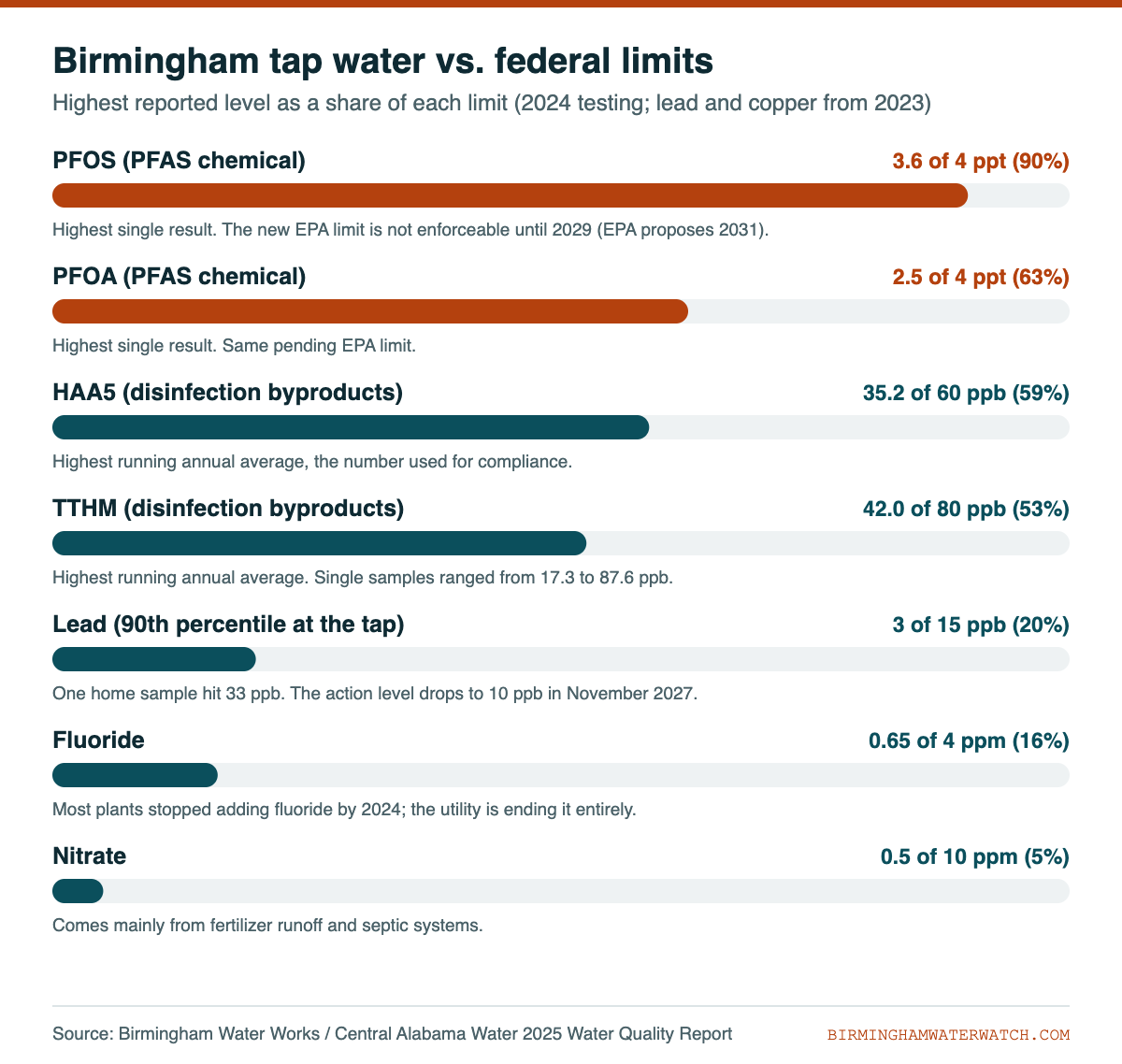
| Contaminant | Highest level | Federal limit | Where it comes from |
|---|---|---|---|
| Lead (90th percentile) | 3 ppb; one sample at 33 ppb | Action level 15 ppb (10 ppb from Nov. 2027) | Lead service lines and home plumbing |
| Copper (90th percentile) | 0.10 ppm | Action level 1.3 ppm | Home plumbing |
| Total trihalomethanes (TTHM) | 42.0 ppb running average; samples 17.3 to 87.6 | 80 ppb | Byproduct of chlorine disinfection |
| Haloacetic acids (HAA5) | 35.2 ppb running average | 60 ppb | Byproduct of chlorine disinfection |
| PFOS | 3.6 ppt | 4 ppt (from 2029) | Industrial and consumer products |
| PFOA | 2.5 ppt | 4 ppt (from 2029) | Industrial and consumer products |
| Chlorine | 2.97 ppm | 4 ppm | Added to kill germs |
| Fluoride | 0.65 ppm | 4 ppm | Natural, plus added at some plants |
| Nitrate | 0.5 ppm | 10 ppm | Fertilizer runoff, septic systems |
| Total coliform bacteria | 3 of 405 monthly samples | Treatment technique | Naturally present; no E. coli detected |
| Hardness | 40 to 156 mg/L | No limit | Soft to hard, depending on the plant |
Source-water testing also found Cryptosporidium, a parasite, in 1 of 32 samples at a very low level before treatment. Read our full breakdown: Is Birmingham tap water safe to drink?
Lead pipes
Lead in Birmingham water comes mostly from the pipes that connect homes to the main, not from the treatment plants. The utility’s inventory shows how much is still unknown.
You can look up your address in Central Alabama Water’s service line lookup tool and request a water test by calling (205) 244-4375. Our step-by-step guide: How to check if your Birmingham home has a lead water line.
PFAS, the “forever chemicals”
Federal testing found four PFAS compounds in Birmingham water in 2024. None has an enforceable limit yet, but PFOS came close to the 4 ppt standard EPA set in 2024.
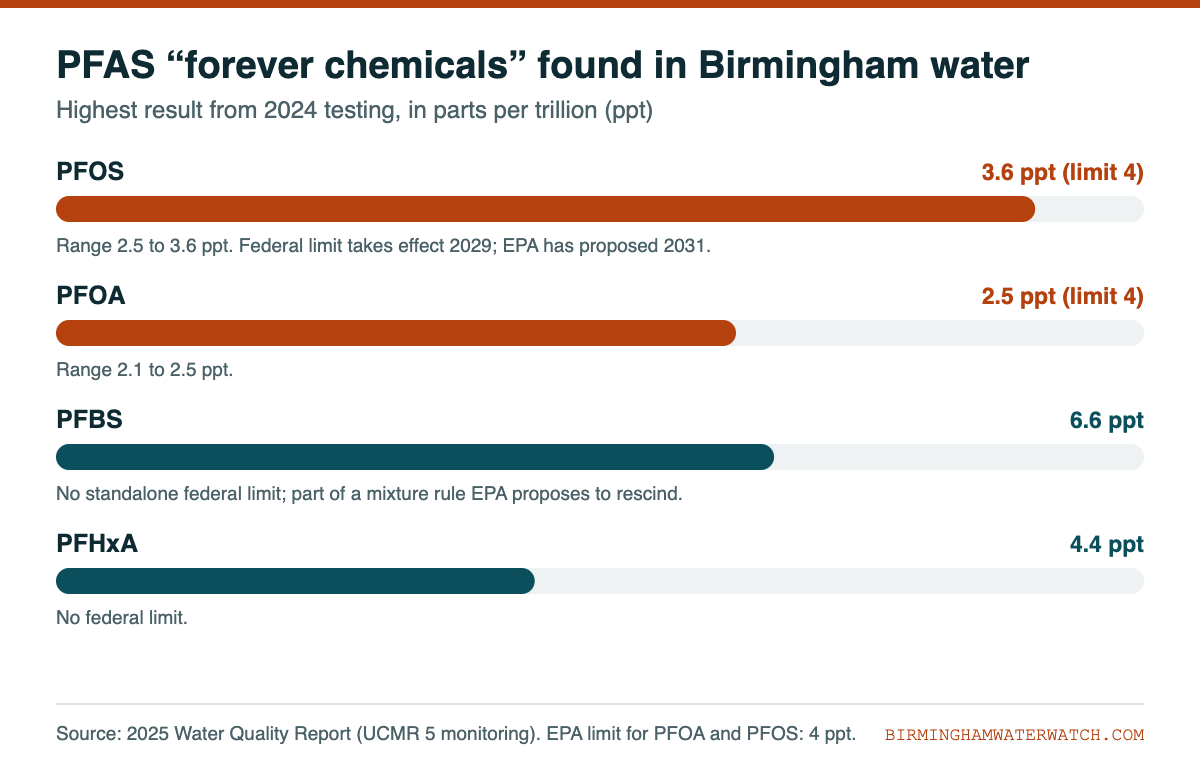
More context, including where national PFAS rules stand: PFAS in Birmingham water: what testing found.
Fluoride
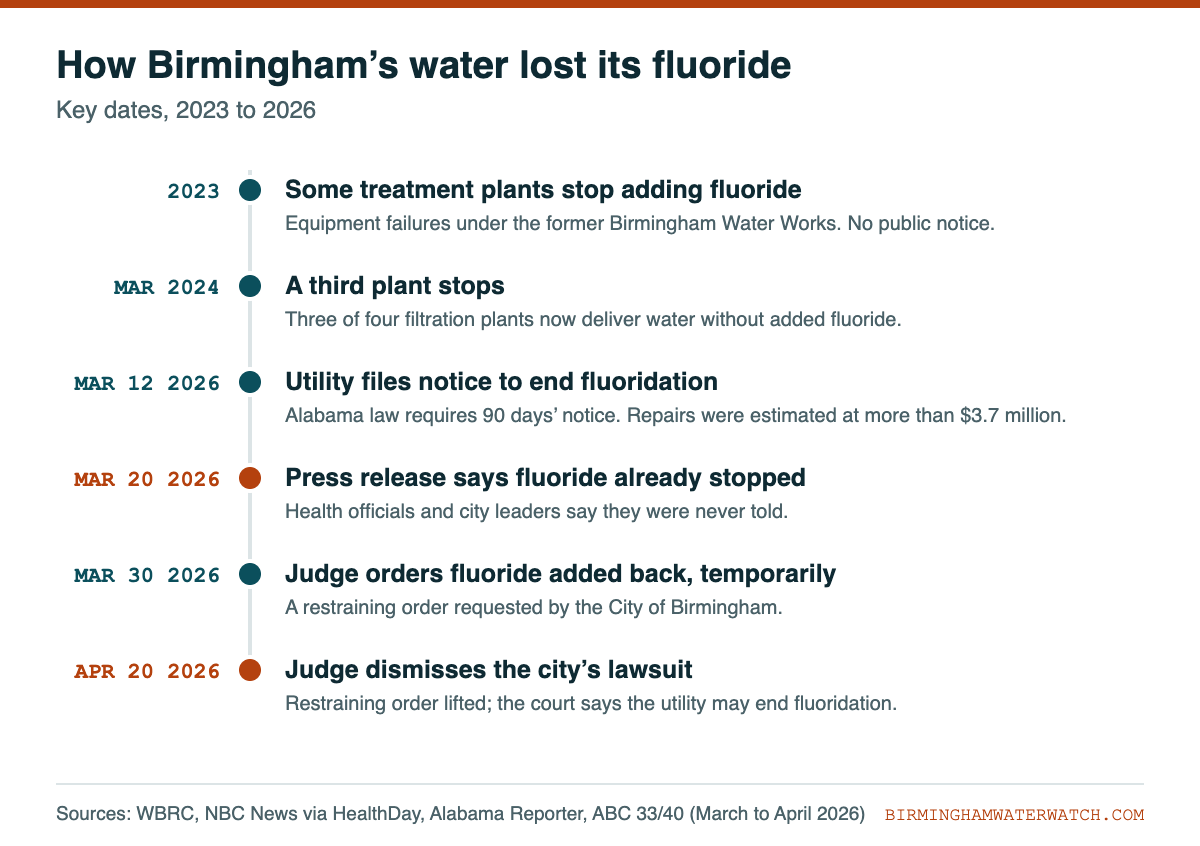
What it means for your family’s teeth, and what dentists recommend instead: Birmingham’s water lost its fluoride.
Leaks, budgets and reliability
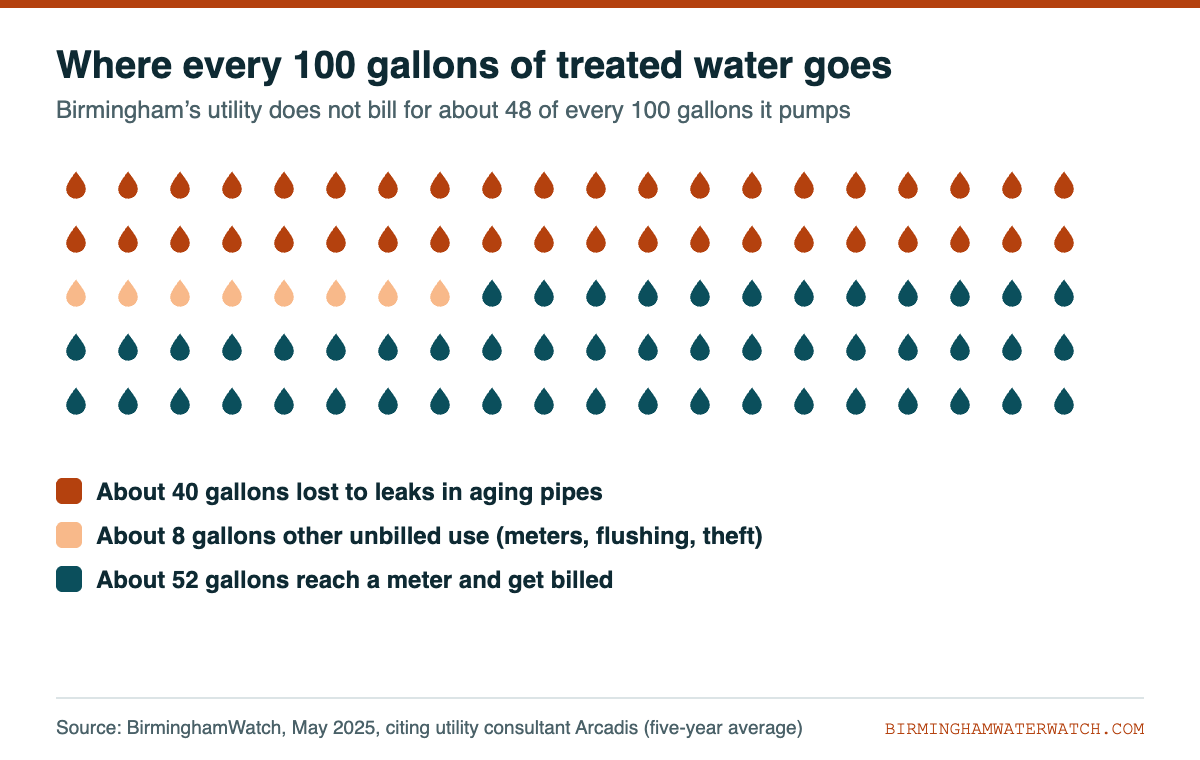
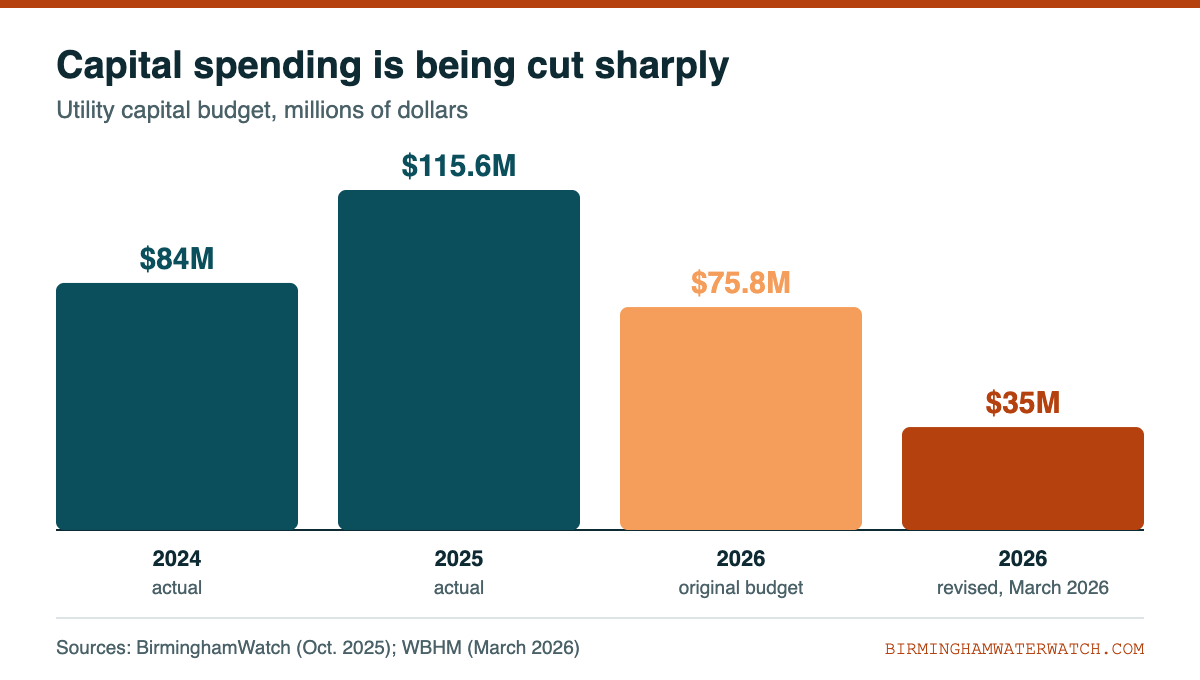
In March 2026 the board cut 225 jobs, reduced main pipeline replacement funding from $15 million to $2.1 million, and scaled back repairs to the 116-year-old Lake Purdy Dam. In J.D. Power’s 2026 water utility study, the utility ranked last in its region for the third year in a row. The full story: Why Birmingham loses 40% of its water.
What you can do
If your home was built before 1989 or your line shows as unknown, use a filter certified to NSF/ANSI Standard 53 for lead for drinking and cooking, run the cold tap before using water that has sat for hours, and never use hot tap water for baby formula.
The filters we recommend for Birmingham homes:

Aquasana Claryum 2-Stage Under-Sink
Filtered water at your kitchen tap. Certified for lead and PFOA/PFOS reduction.

Aquasana Rhino Whole House
Filters every faucet and shower at the main line. Rated for 10 years or 1,000,000 gallons.

Aquasana Clean Water Machine
Countertop dispenser. No plumbing, no landlord permission.

Aquasana Shower Filter
Cuts over 90% of chlorine in the shower. Installs in minutes, no tools.
Birmingham water in the news
- WBHM · APR 22, 2026Birmingham’s regional water utility secures loans to replace lead pipelines
- ABC 33/40 · APR 20, 2026Judge dismisses Birmingham lawsuit, clears path for CAW to end fluoridation
- WBRC · MAY 8, 2026Central Alabama Water ranks last in customer satisfaction survey
- WBHM · MAR 21, 2026Water utility board cuts budget and dam rehab, expands CEO’s power
- WBRC · MAR 25, 2026Health leaders raise concerns after learning water lacked fluoride for years
- BIRMINGHAMWATCH · JUL 10, 2025Is there lead in your water?
- BIRMINGHAMWATCH · MAY 20, 202540% of water lost to leaks, new Birmingham Water Works board learns
- WBHM · 2025Ivey overhauls Birmingham Water Works Board amid cries of racial discrimination
Sources
- Birmingham Water Works 2025 Water Quality Report (2024 data), PDF
- Central Alabama Water: Lead service line FAQs
- U.S. EPA: Lead and Copper Rule Improvements
- Ballard Spahr: EPA’s May 2026 PFAS proposals (June 2026)
- BirminghamWatch: Capital cuts loom as Water Works struggles to balance 2026 budget
- Alabama Reporter: Judge orders Central Alabama Water to add fluoride
Birmingham Water Watch is independent and is not affiliated with Central Alabama Water. This report is for general information and is not medical advice.